

API Integrations – Why Open APIs & Integrations Are the Future of HR Tech


By Callum Pennington, CEO at HBHR
Starting a new job is already a big change.
New people, new responsibilities, new processes and usually a fair few new systems to get your head around. Yet for too many people, onboarding still amounts to a laptop, a login, an induction and a “shout if you need anything”. Our latest research suggests that simply isn’t enough.
We surveyed 1,000 UK adults and found that it takes the average worker 7.3 months to feel fully settled and productive in a role, and nearly one in ten said it took them more than a year. Most interestingly, 7% said they had never felt fully settled and productive in a role at all.
For employers investing heavily in recruitment, productivity and retention, I think that is a number worth paying attention to.
Businesses spend a huge amount of time and money finding the right people. We advertise roles, conduct interviews, negotiate offers and celebrate when somebody accepts, but getting someone through the door is only the beginning. The first few weeks and months are when somebody learns how an organisation really works.
When those answers are difficult to find, it creates friction at exactly the point when somebody is trying to build confidence in a new role, and the impact can be significant.
Our research also found that one in ten people had seriously considered leaving a job within their first month, while 9% had actually left a role within their first three.
One in eight said they had received little or no formal training for their role and 9% said they had received no formal onboarding at all.
Among 25 to 34 year olds, almost one in six said their onboarding experience had negatively affected how they viewed their employer. That tells us onboarding isn’t simply an HR admin task, it’s a business issue.
One of the biggest mistakes businesses make is thinking onboarding finishes after somebody’s first week.
A welcome meeting, an induction presentation, a few policies to read and some initial training might get somebody started, but it doesn’t prepare them for the next six months, the next year or the next stage of their career. People need to be set up properly when they join, but they also need ongoing training and development as their responsibilities change, new processes are introduced and the business evolves.
That is where onboarding and learning need to become much more connected. The first day matters, but so does month twelve.
Training shouldn’t be something employees complete when they join and then forget about. It should be part of how an organisation continuously develops its people. As people progress, change roles, take on more responsibility or need new skills, employers need a simple way to keep that development going, and employees need easy access to the learning that helps them succeed.
For managers and HR teams, that also means having clear visibility over what training has been completed, what is outstanding and where people might need more support.
This thinking is a big part of why we have launched HBHR Learn, our new Learning Management System.
We already help businesses manage HR, payroll, time and attendance and the wider employee journey through HBHR. Learning was the natural next step, because an employee doesn’t experience your organisation as a collection of different software products, they experience one employer. If their HR information is in one system, payroll in another, timesheets somewhere else and learning sitting on a completely separate platform, employees are left navigating that complexity, and HR teams are left managing it.
We wanted to change that.
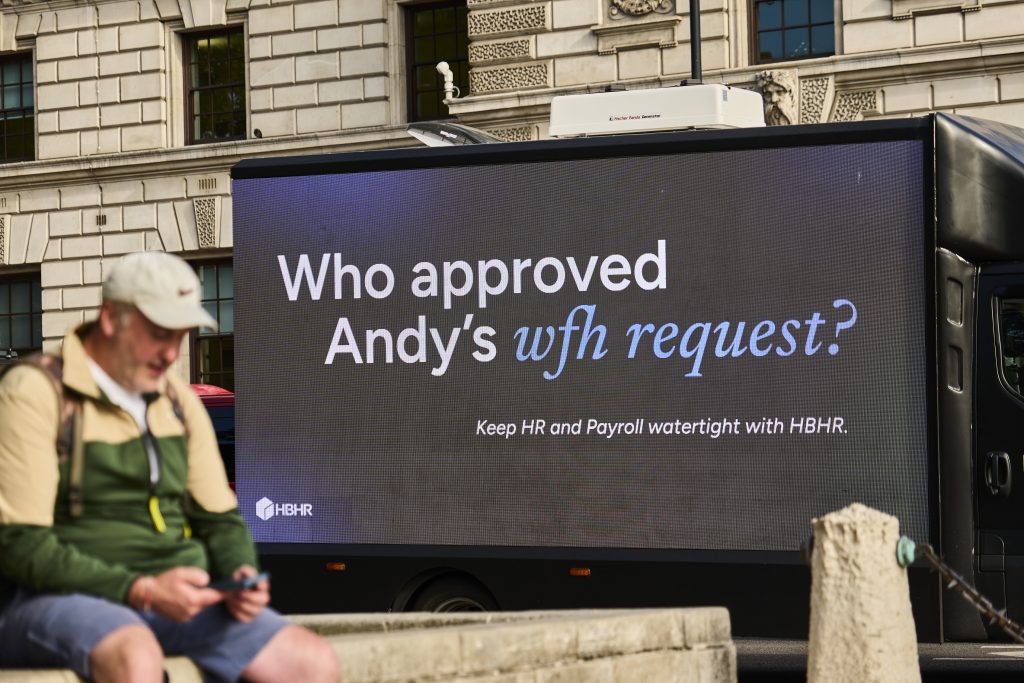
HBHR brings HR, payroll, time and learning together in one place, which is also one of the central messages behind our Westminster campaign.
With HBHR Learn, learning becomes part of the wider employee journey. It starts with getting somebody properly set up when they join, but it shouldn’t stop there. As people develop, change roles, take on new responsibilities or need to build new skills, their learning should continue alongside them.
That is the opportunity. Not just better onboarding. Better development from day one onwards.
This is really the wider problem we are trying to solve at HBHR. Most organisations haven’t deliberately created complicated processes, they have simply added different systems over time, with spreadsheets, emails and manual work filling the gaps between them.
Before long, employees are jumping between systems and HR teams are spending huge amounts of time moving information around, answering basic questions and checking that things have been done.
Technology should remove that work, not create more of it.
That is also where AI has a genuinely useful role to play, not by replacing HR teams, but by helping remove repetitive work, making information easier to access and giving HR and managers better visibility across their workforce.
The goal should be simple. Less time administering work and more time developing people.
As Parliament returns to Westminster after the summer recess, there will be plenty of discussion about productivity, skills and economic growth.
Those are big questions. But there are also smaller productivity gains sitting inside businesses every day.
Helping somebody become confident in their role more quickly is one. Giving employees continuous access to training and development is another. Removing repetitive admin from HR teams is another. Making sure managers have the information they need without jumping between multiple systems is another.
None of those things alone solves the UK’s productivity challenge, but across thousands of employers and millions of employees, they add up.
That is why we’re taking this message to Westminster. Because if the average UK worker takes more than seven months to feel fully settled and productive, employers should be asking what they can do differently, and for me, that starts with seeing onboarding for what it really is. Not a one week process, but the beginning of an employee’s development with your business.

The research was conducted by Censuswide among a nationally representative sample of 1,000 UK adults aged 18 and over. The data was collected between 19 and 21 August 2026. Censuswide is a member of the Market Research Society and British Polling Council and a signatory of the Global Data Quality Pledge.